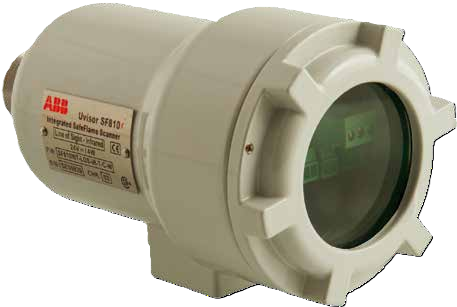
Industrial combustion systems require highly reliable flame monitoring equipment to ensure operational safety, combustion stability, and efficient energy utilization. In industries such as thermal power generation, petrochemical refining, steel manufacturing, cement production, and industrial boiler automation, flame scanners are essential components of burner management systems.
The ABB SF810-FOC-IR Flame Scanner is specifically designed for industrial flame detection applications involving oil-fired, coal-fired, and gas-fired burners. Using advanced infrared sensing technology, the scanner continuously monitors flame conditions and transmits reliable signals to combustion control systems.
Despite its robust industrial design, flame scanners operating in harsh environments may occasionally experience operational issues caused by contamination, improper alignment, electrical interference, or unstable combustion conditions.
This detailed guide explains the most common problems associated with the ABB SF810-FOC-IR flame scanner and provides practical troubleshooting methods, maintenance recommendations, and optimization strategies to improve combustion reliability and industrial safety.
What Is ABB SF810-FOC-IR Flame Scanner?
The ABB SF810-FOC-IR is an industrial infrared flame scanner used to monitor burner flames in industrial combustion systems. It is designed to detect infrared radiation emitted by combustion flames and provide continuous flame status feedback to burner management systems.
The scanner is widely used in:
Thermal power plants
Industrial boilers
Oil refinery furnaces
Petrochemical combustion systems
Cement kilns
Steel manufacturing furnaces
Waste incineration systems
The flame scanner helps ensure safe and stable burner operation by identifying flame presence and triggering protective shutdowns when flame loss occurs.
Main Functions of ABB SF810-FOC-IR
Continuous Flame Monitoring
The scanner continuously detects burner flame conditions during operation.
The scanner integrates with burner management and combustion control systems.
Improved Combustion Stability
Accurate flame detection enhances process efficiency and combustion reliability.
Industrial Automation Integration
Supports automated combustion monitoring in complex industrial facilities.
Why Flame Scanners Are Critical in Industrial Combustion Systems
Industrial burners operate under extreme conditions involving:
High temperatures
Pressurized fuel systems
Continuous ignition cycles
Heavy electrical equipment
Harsh environmental contamination
Without reliable flame detection, facilities risk:
Furnace explosions
Delayed ignition incidents
Fuel accumulation
Equipment damage
Emergency shutdowns
Production losses
Reliable flame scanners are therefore essential for maintaining industrial combustion safety and process continuity.
Common Problems with ABB SF810-FOC-IR Flame Scanner
One of the most searched industrial maintenance topics is troubleshooting flame scanner problems. Below are the most common operational issues experienced in industrial combustion systems.
1. Flame Scanner Fails to Detect Flame
Symptoms
Burner trips shortly after ignition
Flame signal remains low or zero
Flame failure alarms occur
Boiler startup sequence fails
Possible Causes
Dirty Optical Lens
Soot, ash, dust, or oil contamination may block infrared detection.
Incorrect Installation Position
Improper viewing angle may prevent accurate flame monitoring.
ABB is globally recognized for industrial automation innovation and combustion safety technology.
Industrial users trust ABB products because of:
Proven industrial reliability
Long operational lifespan
Advanced engineering design
Strong global technical support
Excellent system compatibility
High safety performance
The ABB SF810-FOC-IR flame scanner continues delivering dependable combustion monitoring performance across multiple industries worldwide.
Conclusion
The ABB SF810-FOC-IR flame scanner is a critical component for industrial combustion safety and reliable burner operation. Its advanced infrared flame detection technology helps industries maintain stable combustion conditions while reducing downtime and operational risks.
Most operational problems can be resolved through proper maintenance, accurate alignment, stable combustion tuning, and regular inspection procedures.
For facilities operating industrial boilers, furnaces, and burner systems, investing in reliable flame scanner technology is essential for improving efficiency, enhancing safety, and maintaining continuous production performance.
The ABB SF810-FOC-IR remains a trusted industrial solution for high-performance flame monitoring applications requiring long-term operational reliability.
Powering Modern Industry: A Comprehensive Guide to ABB Bailey Cable Solutions In the world of industrial automation, energy distribution, and robust infrastructure, the quality and reliability of cable systems are non-negotiable. ABB Bailey stands at the forefront of this critical sector, engineering cables that deliver…
ABB Burry Cables: Complete Guide to NKAS, NKCL, NKDO, and NKDS Series ABB Burry cables are renowned worldwide for their reliability, durability, and high performance in industrial applications. This guide provides an in-depth overview of ABB Burry cable series, including NKAS01-15/10/20/25/30, NKAS11-15/10/20/25/30, NKCL01-15/20/25/30/50/100, NKCL01B-5, NKCL02B-5,…
ABB Burry Cables: High-Quality Industrial Power and Control Solutions ABB Burry cables are renowned for their reliability, durability, and high-performance in industrial environments. This comprehensive guide explores the full range of ABB cables, connectors, and panels, including models 1948509A5, 6637636A1-15/10/20/25/30, 6637818A1, 6638748A1, 6642335A1-15, 6CABLE-15, DIPSHUNT…